Josie's illness
Klara and the SunJosie's illness is a serious, recurring condition that reaches beyond symptoms to shape the daily life of Josie and her family, their arguments about what she can admit, and their fear of losing her. The narrative presents it through competing kinds of knowledge: Josie’s attempts to minimize or conceal her weakness, the adults’ medical and emotional vigilance, and Klara’s observations and hopes. Its repeated returns make illness not a single crisis but a condition around which care, loneliness, and the prospect of death gather.
Early Warning and Everyday Care
Before Josie comes to live with Klara, she warns her that she is sometimes unwell and that things at home may become unusual. She does not offer a definite diagnosis; instead, she speaks cautiously, saying that she does not know what is happening or whether it is bad. Her candor is an effort to avoid promising an uncomplicated future. She wants Klara to come despite the possibility that illness may complicate their life together, and Klara responds through the shop window with a gesture of solidarity, wishing to convey that they would face anything difficult together.
Josie’s illness also appears in the circumstances of Klara’s selection. When Josie returns to the store after having become sick, she tells her mother she is fine again and asks to buy Klara before someone else does. The Mother questions whether Klara is a B3; the Manager identifies her as a fourth-series B2. The exchange places Josie’s return and her excitement beside the fact that she has been ill, while the family’s decision to bring Klara home establishes the relationship that will become central to her care.
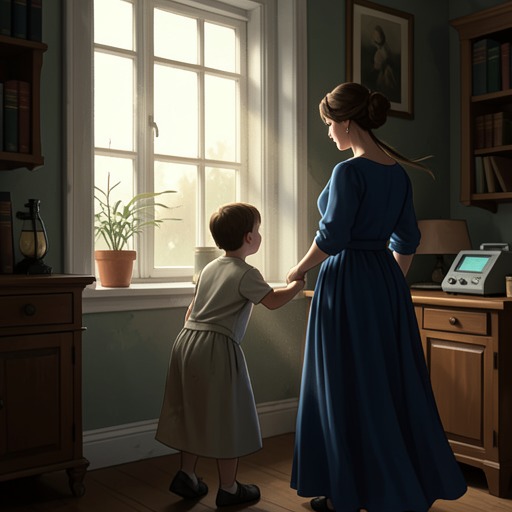
At home, illness is set against a fragile but cherished morning routine. Josie wants to join the Mother for the quick coffee in the kitchen, even when the Mother has little time before work. Klara learns this by mistake: after waking Josie, she lets her fall asleep again, thinking rest would help. Josie wakes too late, and the Mother’s car is already leaving. Josie does not shout again, but she eats breakfast without smiling. Klara understands that missing this brief contact risks letting loneliness into Josie’s day, regardless of whatever else happens. Illness therefore matters not only as bodily weakness but through the ordinary connections it interrupts.
Recurrence, Denial, and Family Strain
Three weeks after an interaction meeting, Klara notices that Josie’s posture and breathing are unlike those of ordinary sleep. She raises the alarm, bringing the Mother immediately; the Mother calls Dr Ryan, and Melania Housekeeper later calls again to hurry him. After examining Josie carefully, Dr Ryan says there is nothing to worry about. Relieved, the Mother turns briskly to an everyday explanation, telling Josie to quit the energy drink she has always considered bad for her. Josie, her head still on the pillow, says she is merely tired, denies that anything is wrong, and points out that the Mother will be late for work. The Mother replies that worrying about Josie is her work and credits Klara for raising the alarm. Medical reassurance, Josie’s own account, and the Mother’s readiness to worry coexist without resolving what the illness means.
The next serious confrontation grows out of a Sunday expedition to Morgan’s Falls. Josie spends the preceding days trying on clothes and studying herself in the wardrobe mirror, confident she will be well enough to go. Klara senses warning signs, however, and knows that Sunday breakfasts can turn tense: the Mother is not about to leave for work, so questions that might otherwise pass quickly can open difficult subjects, including Josie’s education assignments and social-interaction scores. During the journey, the Mother recognizes that Josie is sick again. Josie denies it, but the Mother accuses her of concealing her condition and of letting everyone begin a day out without telling them that she is unwell. Josie protests that it is unfair to call her sick when she feels strong enough. The dispute exposes more than a difference over symptoms: Josie’s effort to preserve the outing and her independence collides with the Mother’s fear and sense of responsibility.
The episode leaves relational consequences as well as uncertainty about Josie’s health. Klara had expected the trip to warm the household, but afterward both Josie and the Mother grow distant from her. She wonders whether her limitations as a B2, compared with a B3, have disappointed them, and resolves to work harder as Josie’s AF. At the same time, she begins to recognize that human attempts to escape loneliness can involve complicated maneuvers whose results were not under her control. Several days after the outing, Josie’s health collapses. The recurrence makes the earlier argument look less like a settled diagnosis than a painful struggle over what can be acknowledged before the crisis becomes undeniable.
Collapse, Convalescence, and Renewed Decline
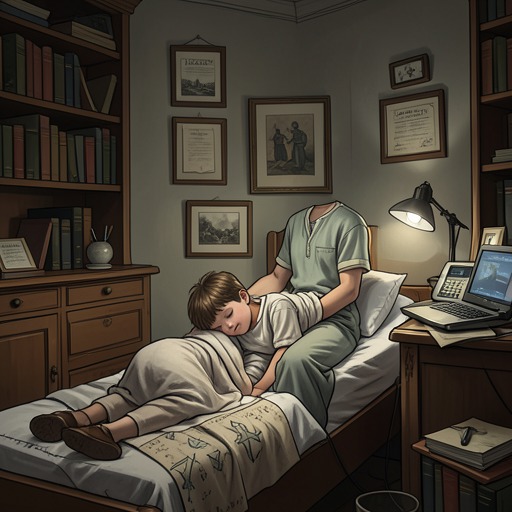
When Josie becomes too weak to come downstairs for the Mother’s quick coffee, the Mother carries the ritual to her bedroom. She stands over Josie’s sleeping figure, keeping her back straight as she sips coffee and looks down at the bed. The altered routine preserves their contact but makes the illness visible in the space where Josie should be awake and present. The Mother’s composure contrasts with the vulnerability of the sleeping figure, while the familiar coffee becomes a measure of how far Josie’s condition has changed.
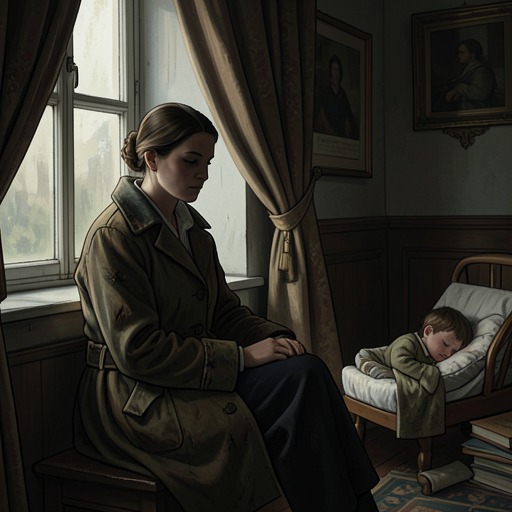
Dr Ryan visits frequently, and Josie spends long stretches asleep. Sunlight continues to provide its ordinary nourishment, often laying its pattern across her sleeping body, but Klara sees no sign of the special help she hopes the Sun might send. Josie gradually becomes stronger and eventually can sit up in bed. Because Dr Ryan has warned her not to resume her oblong lessons, she fills the time by drawing with sharp pencils in a sketchpad. She tears out each finished or abandoned picture and tosses it into the air; Klara gathers the sheets into ordered piles. This recovery is limited and carefully managed: rest replaces lessons, and drawing gives Josie an activity that her weakened state permits.
As Dr Ryan visits less often, Rick visits more. Even Melania Housekeeper, who has been wary of him, can see that his presence raises Josie’s spirits; she allows the visits but limits them to thirty minutes. When Rick first comes to the bedroom, Klara starts to leave to give them privacy, but Melania stops her and orders her to remain as a chaperone. Rick’s visits introduce companionship into the convalescence, but they do not amount to a cure. After he stops coming, Josie shrugs when asked where he is, then grows quieter as the days pass. Without Rick and their bubble game, her enthusiasm for drawing drains away: she throws unfinished pictures onto the floor and lies staring at the ceiling. Klara offers to play the game with her, but Josie rejects the suggestion sharply.
Klara becomes newly attentive to the possibility of another decline. As Josie grows lethargic, she watches for changes in the Sun’s pattern or a sudden break in overcast weather, hoping these might signal the special help she believes could restore Josie. The ordinary nourishment continues unfailingly, but the hoped-for intervention does not arrive. The distinction between what Klara observes and what she expects is crucial: sunlight is present throughout the recovery and weakening, while its special assistance remains a belief rather than an event she can confirm.
Death Anxiety and the Limits of Reassurance
The illness makes the possibility of death explicit in the night. Josie’s window blind is raised one third because she dislikes complete darkness, and moonlight and stars make patterns across the wall and floor. Klara hears a humming sound and finds Josie hidden beneath a mound of duvet. When Klara gently touches it, the mound erupts and Josie begins to sob. In the dark, the illness is not presented through a medical examination but through concealed grief and a sudden, bodily revelation of distress.
Josie tells her mother that she does not want to die. The Mother embraces her, and their hair and limbs mingle as they rock together, recalling the extended movement of their goodbyes. The scene gives direct expression to a fear that earlier disputes had kept at a distance. Josie’s denial of sickness in daylight and her terror at night are not interchangeable statements: the first resists being treated as ill, while the second shows that the possibility of death has entered her understanding of what may happen.
Klara, meanwhile, tells Rick that she considers Josie’s illness serious and that Josie could become so weak she would have to pass away, as her sister did. Yet Klara also believes there is a way for Josie to become well again that the adults have not considered. She regards the situation as urgent and says that waiting is no longer enough. Her account brings together the medical seriousness she infers, the precedent of the sister’s death, and her own hope for a different outcome. It also marks a shift from watching and caring to seeking some way to act.
The adults’ discussion of that hope makes its uncertainty plain. The Mother asks whether Klara’s expectation of special help is merely hope or something more solid that the others have not seen. Klara cannot offer an adult medical finding; her confidence comes from her interpretation of the Sun and her observations of Josie. Later, when the possibility of a new Josie is being discussed, Klara insists that the present Josie may still become healthy and that there is a good chance of this. At the same time, she promises that if Josie must die, she will do everything in her power to train the new Josie to resemble the former one, using what she has learned by observing her. The promise reveals how completely the family’s fear has become bound to the prospect of replacement, while preserving the distinction between hope for Josie’s recovery and preparation for her loss.
Meaning and Narrative Role
Josie’s illness is repeatedly narrated through acts of interpretation. Josie says she is tired or strong enough; the Mother watches, challenges, and worries; Dr Ryan examines her and at one point finds nothing to worry about; Klara reads posture, breathing, energy, and changes in routine. These accounts do not simply cancel one another. Each has a different basis and consequence: Josie’s denial protects her claim to ordinary life, the Mother’s vigilance turns concern into confrontation, medical reassurance permits temporary relief, and Klara’s attentive watching leads her to raise the alarm and later to search for help.
The pattern of recurrence also gives everyday details unusual weight. A missed coffee, a journey interrupted by an argument, a pile of drawings, and a visit cut short each register the illness through changes in what Josie can do and whom she can reach. Her health affects the rhythm of care and companionship, but it is not reducible to a single dramatic collapse: the text includes temporary reassurance, gradual improvement, the limits imposed on lessons, renewed lethargy, and open fear of death. That sequence makes recovery real without making it secure.
The illness finally concentrates the story’s central conflict between preserving the person who is present and preparing for the possibility that she may not survive. The Mother’s question about whether Klara’s hope is solid and her later challenge to Rick about whether he has truly won show that Josie’s health is also the measure against which the family judges its choices and futures. Klara’s promise to help create a new Josie does not erase the present girl’s danger; it arises because the danger has become impossible to ignore. In this way, illness drives the need to observe and remember Josie while exposing the uncertainty—and emotional cost—of treating those memories as a possible substitute for her continued life.